Durable vs 10Web AI: Which Platform Fits Your Website Strategy?
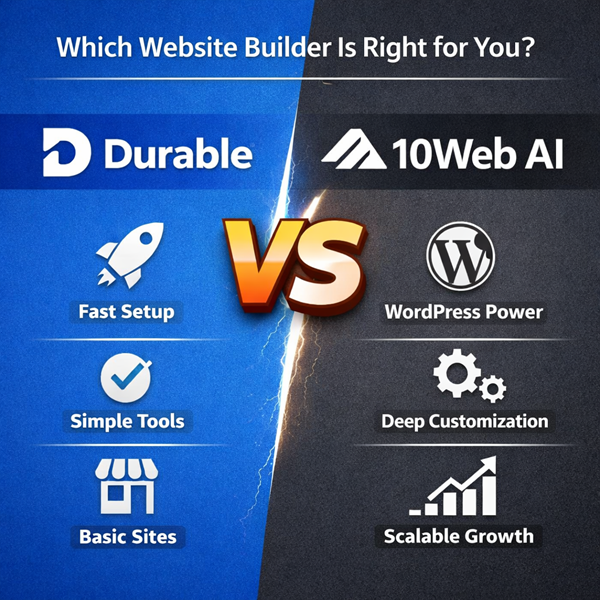
Durable vs 10Web AI compares two distinct approaches to building a website with artificial intelligence. While both platforms generate sites quickly, their underlying architecture creates meaningful differences in flexibility, SEO control, ecommerce capability, and long-term scalability.
If you are choosing between these two builders, you are likely weighing operational simplicity against WordPress-powered flexibility. The real difference comes down to structure, pricing philosophy, growth expectations, and how much control you want over your website environment.
This article evaluates both platforms using consistent criteria so you can determine which model aligns with your business strategy. For broader context on how AI website builders are structured and what evaluation factors matter most, review AI Website Builder Guide.
Durable: Platform Overview & Positioning
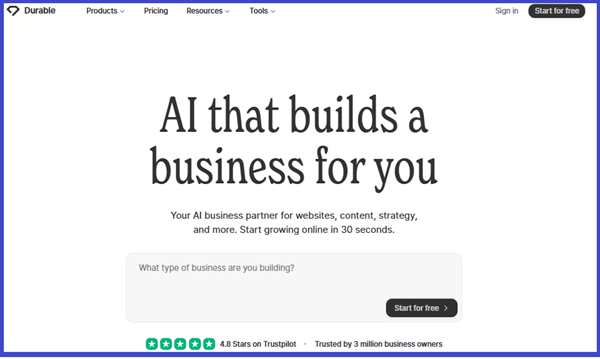
Durable is a closed AI website builder designed for speed and convenience. It bundles hosting, SSL, CRM, invoicing, and basic marketing tools inside a proprietary system that minimizes technical involvement.
The platform is aimed primarily at small service businesses that want a functional website online quickly without managing plugins, themes, or backend settings. Editing is structured and simplified, which keeps the learning curve low but limits advanced customization.
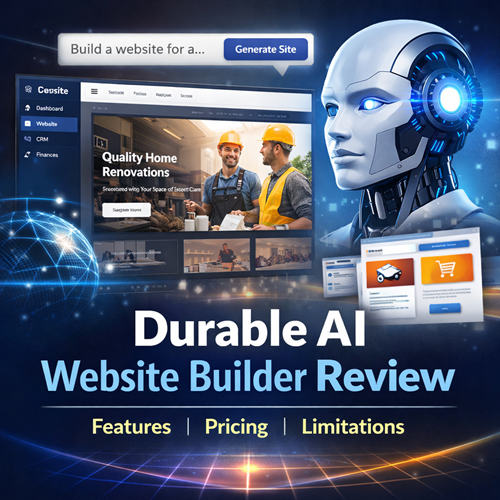
For a deeper breakdown of features, pricing tiers, and structural limitations, see the detailed Durable AI website builder review.
10Web AI: Platform Overview & Positioning
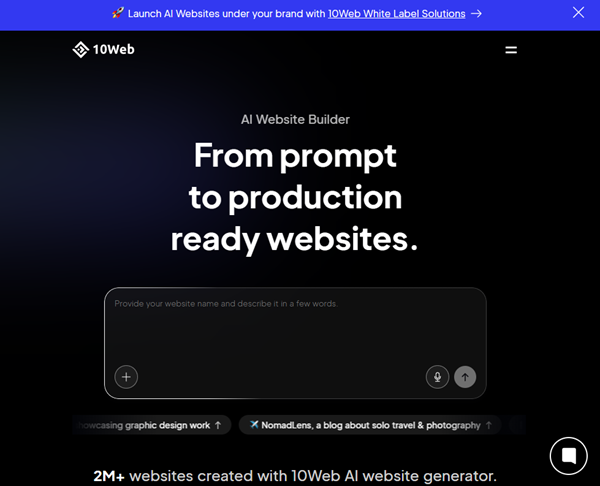
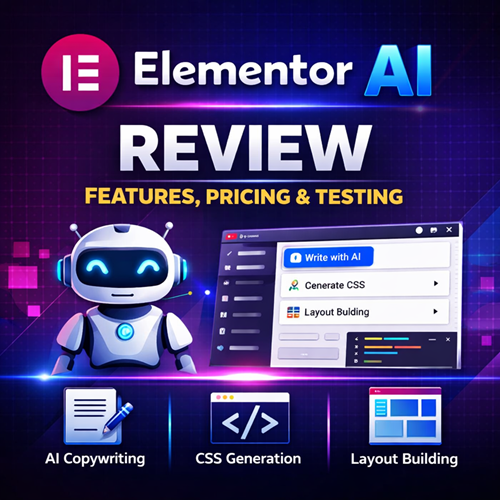
10Web is an AI-powered WordPress platform running on managed Google Cloud hosting. Rather than operating inside a closed ecosystem, it builds on WordPress and uses Elementor for visual editing.
This structure allows access to the full WordPress plugin ecosystem, advanced SEO configuration, and scalable ecommerce through WooCommerce. It offers more flexibility and expansion potential, though it introduces a moderate learning curve compared to simplified builders.
For a comprehensive evaluation of pricing, features, and WordPress flexibility, review the full 10Web AI builder review.
Architecture: Closed Builder vs WordPress Infrastructure
The architectural difference between these platforms drives most of their trade-offs.
Durable operates entirely within its own environment. Users do not manage plugins, server configurations, or advanced integrations. This reduces friction and simplifies maintenance, but it also caps long-term flexibility.
10Web runs on WordPress infrastructure. That means plugin access, theme control, code flexibility, and deeper integrations. It increases structural control but requires greater involvement from the user.
The decision here is not about superiority. It is about whether you value contained simplicity or long-term adaptability.
Pricing Structure & Value
At the entry annual level:
- Durable Starter: approximately $12–$15 per month
- 10Web AI Starter: approximately $10 per month
Durable’s pricing includes bundled operational tools such as CRM and invoicing within higher tiers. Its value proposition centers on convenience and all-in-one functionality.
10Web includes managed Google Cloud hosting, Elementor, and full WordPress infrastructure. CRM and invoicing typically require plugins or third-party tools.
The price difference is relatively small. The strategic difference lies in what each system enables over time.
Side-by-Side Feature Comparison
| Category | Durable | 10Web AI |
|---|---|---|
| Platform Type | Closed AI website builder | AI-powered WordPress platform |
| Built On | Proprietary system | WordPress + Elementor |
| Entry Annual Price | ~$12–$15/mo | ~$10/mo |
| Hosting Included | Yes | Yes (Google Cloud managed) |
| AI Website Generation | Yes | Yes |
| Design Editing | Structured block editor | Full Elementor drag-and-drop |
| Plugin Ecosystem | No | Yes (Full WordPress plugins) |
| SEO Control | Basic meta controls | Advanced (WordPress SEO plugins) |
| CRM | Built-in (basic to expanded) | Not built-in (use plugins/integrations) |
| Invoicing | Included (Business plan) | Not native (requires plugin) |
| Ecommerce | Basic store features | WooCommerce (scalable) |
| Scalability | Limited | High ceiling |
| Agency / Multi-Site | No | Yes (Agency plans available) |
| Custom Code Access | Limited | Full WordPress flexibility |
| Learning Curve | Very low | Moderate |
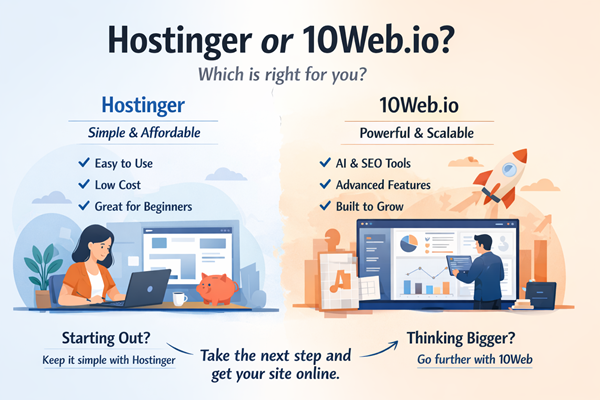
This comparison highlights a clear divide: Durable focuses on operational ease, while 10Web emphasizes extensibility and growth capacity.
SEO Capability & Search Growth
Durable provides essential SEO controls such as meta titles and descriptions. For local businesses targeting limited geographic search visibility, this may be sufficient.
10Web supports advanced SEO plugins, schema configuration, and technical customization through WordPress. This enables deeper optimization and supports content-driven growth strategies.
If search traffic is expected to scale meaningfully, WordPress infrastructure offers more flexibility.
Ecommerce Capacity
Durable supports basic ecommerce functionality suitable for small catalogs and straightforward transactions. It works well for service add-ons or limited product offerings.
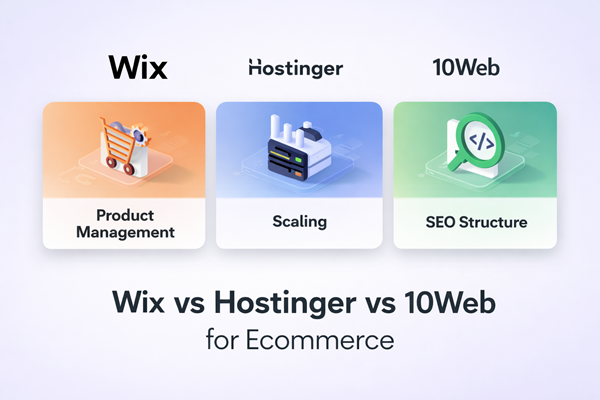
10Web integrates WooCommerce, allowing advanced product management, payment integrations, and plugin expansion. Resource tiers increase scalability for higher traffic and larger inventories.
If ecommerce is central to your business model, WordPress infrastructure provides more long-term room to grow.
Scalability & Long-Term Control
Durable is optimized for straightforward websites with predictable needs. It reduces maintenance and simplifies operations for business owners who prefer minimal technical management.
10Web is built for expansion. Content scaling, advanced integrations, multi-site management, and agency workflows are all supported within its infrastructure.
The real consideration is whether your site is likely to remain stable or evolve significantly over time.
Fit-Based Recommendation
Choose Durable if:
• You want a website live quickly with minimal setup.
• You prefer built-in CRM and invoicing inside one simplified system.
• Your website needs are predictable and unlikely to expand substantially.
Choose 10Web if:
• You want WordPress flexibility and plugin access.
• SEO growth and content expansion are strategic priorities.
• Ecommerce or multi-site management may scale over time.
The difference between these platforms is structural, not cosmetic. Your decision should reflect how much control, flexibility, and long-term scalability your business requires.