AI Website Builder vs Traditional Website Builders: Speed, Control, and Long-Term Tradeoffs
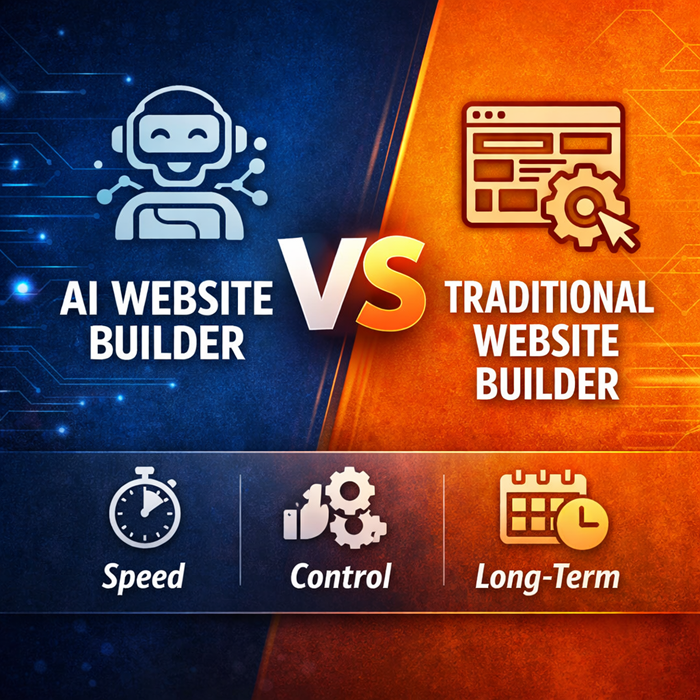
Choosing between an AI website builder and a traditional website builder is not about which one is better. It’s about how much of the process you want automated and how much control you want from the beginning.
If you’re new to the concept itself, begin with the foundational guide:
AI Website Builder Guide: How It Works and What to Look For
https://ai.salesmarket.com/ai-website-builder-guide.html
That article explains how AI builders function. This comparison focuses strictly on tradeoffs and decision clarity.
Overview of Both Platforms
AI Website Builders
AI website builders use prompts and automation to generate:
- Layout structure
- Page sections
- Written content
- Visual elements
- Basic SEO metadata
You answer questions about your business and goals, and the system produces a functioning draft website.
Examples include:
The emphasis is speed and reduced friction.
Traditional Website Builders
Traditional website builders provide templates and manual design tools. You build your site intentionally, section by section.
Examples include:
- Squarespace
- Weebly
- Webflow
- WordPress.com
The emphasis is structural control from the start.
Setup and Ease of Use
AI builders prioritize momentum.
Tools like Durable can generate a working draft within minutes. Layout, structure, and initial content appear automatically, reducing blank page friction.
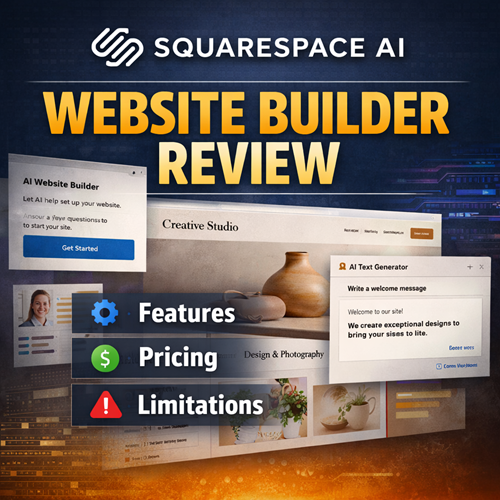
Traditional builders such as Squarespace require manual setup. You choose a template, place sections, adjust layouts, and write content yourself.
If speed and reduced decision fatigue matter most, AI builders feel easier.
If you prefer deliberate design decisions from the beginning, traditional builders provide that experience.
Design and Customization
This is where the tradeoff becomes clear.
AI builders:
- Start with a generated structure
- Allow editing within predefined frameworks
- May limit deeper architectural redesign
Traditional builders:
- Offer greater layout control
- Allow precise spacing adjustments
- Support advanced customization features
- Provide stronger flexibility for complex builds
For example, Webflow enables detailed control over layout and animation behavior.
AI builders prioritize convenience. Traditional builders prioritize flexibility.
Content Creation
AI builders automatically generate:
- Homepage headlines
- Service descriptions
- About sections
- SEO titles and meta descriptions
Traditional builders do not generate content by default.
If writing is your main bottleneck, AI reduces startup friction significantly. However, generated content typically requires editing to align with brand voice and positioning.
Automation accelerates drafting. It does not replace refinement.
SEO and Performance
SEO performance depends more on platform architecture than AI involvement.
For example:
- Wix provides structured SEO tools.
- 10Web runs on WordPress infrastructure.
- Webflow is often selected for performance-focused builds.
AI can generate metadata, but long-term SEO results depend on:
- Site structure
- Content quality
- Technical configuration
- Ongoing optimization
AI assists setup. Strategy remains manual.
Cost Comparison (Short-Term vs Long-Term)
Most AI and traditional website builders use subscription pricing models.
Short-term costs are often similar when comparing equivalent plans that include:
- Hosting
- Templates
- Basic SEO tools
- Support
Long-term cost differences depend more on:
- E-commerce features
- Integration needs
- Scaling requirements
- Migration flexibility
AI functionality is typically bundled rather than sold separately.
Strengths of AI Website Builders
- Rapid setup
- Reduced blank page friction
- Automatic content generation
- Beginner-friendly workflows
- Faster MVP deployment
They simplify the starting phase significantly.
Strengths of Traditional Website Builders
- Greater structural control
- Flexible layout customization
- Stronger long-term scalability
- Predictable design control
- Advanced customization options
They provide deeper architectural flexibility.
Limitations of Each
AI Website Builders:
- May feel restrictive for complex projects
- Generated content requires editing
- Structural changes can be harder later
Traditional Website Builders:
- Slower initial setup
- Greater learning curve
- Manual content creation required
Each approach trades speed for control in different ways.
Who Should Choose an AI Website Builder
AI builders are suited for:
- Small business owners launching quickly
- Founders validating ideas
- Service providers needing a simple online presence
- Users who want writing assistance
- Projects where speed outweighs precision
They prioritize momentum over structural depth.
Who Should Choose a Traditional Website Builder
Traditional builders are better suited for:
- Brand-heavy websites
- Projects requiring precise layout control
- Complex site architectures
- Long-term scalable builds
- Users comfortable with manual setup
They prioritize control over automation.
Final Decision Framework
The real distinction is not AI versus non-AI. It is automation versus manual control.
Ask yourself:
- Do I need help generating content?
- Is speed more important than design precision?
- Am I building an MVP or a scalable platform?
- Do I want the first draft created automatically?
AI website builders reduce startup friction.
Traditional website builders provide structural control.
The right choice depends on how you prefer to build and how far you plan to scale.